

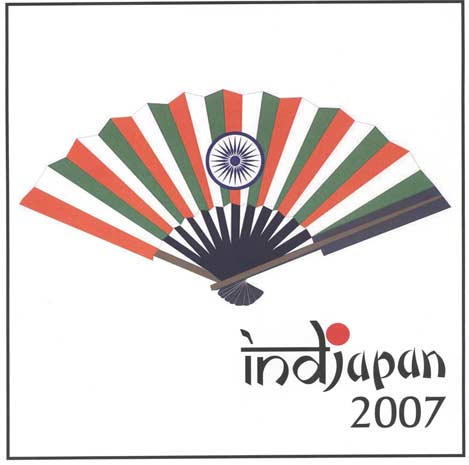
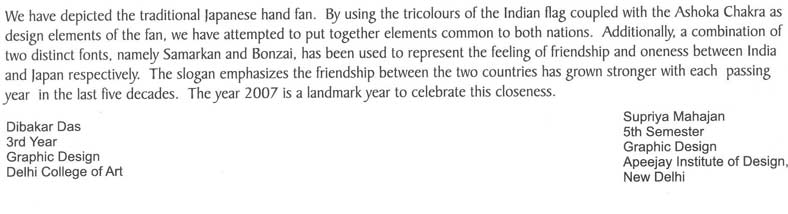
India–Japan Friendship Year 2007 This year provides the opportunity for people from India and Japan to remember and celebrate the links between their great nations. Situated within the Asian sphere— India on the Western edge and Japan on the Eastern—interaction between Japan , China and India has grown since ancient times through trade, the arts and shared philosophies. For Japanese people, often there is a feeling of recognition and immense pleasure in listening to sitar. This may have something to do with the commonalities in music and emotional responses that have developed throughout Asia over many years. As part of the India-Japan Friendship Year 2007 this concert, through the merging of Indian sitar and Japanese blues harmonica, provides another occasion for Indian and Japanese people to nurture and expand their warm relationships.
Dr. Chandrakant Sardeshmukh From a musical atmosphere tempered by the traditional spirituality of the ages Chandrakant Sardeshmukh emerged performing his first concert at the age of eight. It was during time studying the sitar under maestro Ravi Shankar that he became aware of Japan and the depth and beauty it's culture, ancient history, music and arts. Eventually, after touring India and abroad he traveled to Japan in 1991. Performing nationwide since then he has embarked on composing new musical works combining sitar with traditional Japanese instruments. At the Okinawa International Music Festival he appeared with a dancer accompanied by taiko and Western drums. In Chiryu and Tokyo in 2000 he performed sitar duets with shakuhachi, shamisen, koto, jushichigen and taiko. In 2006 he presented an enthusiastically received concert series in Tokyo , one for sitar and Indian percussion with tsugaru shamisen and the other with koto. Along with many other concerts in cities such as Nagoya , Kyoto and Nara he has presented concerts and educational programs for Japanese school children to give them some idea of the richness of India 's culture including its dance and drama. Presently residing in Tokyo , he travels the world extensively performing concerts, teaching and conducting therapeutic music programs. For Dr. Chandrakant, the music he loves, that began centuries ago in pure worship, still has connotations as being sacred, free and joyous. To offer people in Japan something of these qualities and to pass on his knowledge of Indian traditional music to the new generation is one of his foremost wishes.
Mr. Yasujiro Asami Born in Kawaguchi city in Saitama prefecture in 1952 he became interested in Western folk music at the age of twenty. Music for the blues harp became his specialty field and he began playing this instrument eventually reaching a high level of proficiency. He was a teacher at workshops held by Mr. Koichi Matsuda, the pioneer of Japanese blues harp. Other instruments he plays include the Tsugaru shamisen. As recipient of 23rd Japan Harmonica Award in 2001 (awarded by the All Japan Harmonica League) he is their director and adviser to Saitama prefecture Harmonica League. Books he has published include Playing Blues Harp with One's Heart and Blues Harp on CD .